
My Conscience Needed Airing
On "The Posthumous Memoirs of Brás Cubas" by Machado de Assis, and "Bomber" by Len Deighton, but not "The IPCRESS File" by Len Deighton, as previously announced. Please allow me to explain.

I. An Arabian-Night Sort of Fellow
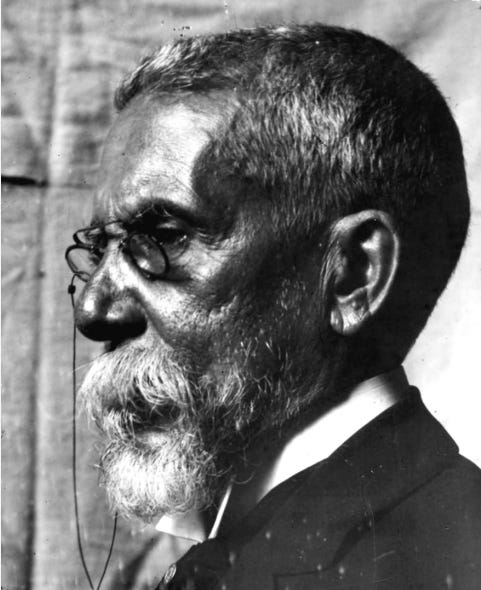
Author Never Read: Machado de Assis
Book Read: The Posthumous Memoirs of Brás Cubas (translated from the Portuguese by Flora Thomson-DeVeaux
This should be a tricky one. Writing about authors with whom I’ve had no previous experience always is, but it becomes even trickier when the book I read turns out to be so singular — this reputation preceded it, in my experience, but it was also fulfilled — and so terrific, that it becomes difficult to find a context (a word I feel like I’m about to overuse in this post) to latch on to, a point of view less shallow than “Well wasn’t that something.”
Only recently have I tried to regain some of my old awareness of what’s happening in the publishing industry — by that I mean only, what is coming out, both that is new and interesting, and that which is interesting, old, and about to be re-issued — but back in 2020 I was pretty on the ball, and I remember that the Penguin Classics reprint of The Posthumous Memoirs of Brás Cubas by 19th century Brazilian writer Machado de Assis, a book considered to be a kind of cult masterpiece, the kind of obscure novel that other writers — notably, in this specific case, John Updike, Susan Sontag, Philip Roth, Salman Rushdie, and others — passed around, was much ballyhooed. So this was finally reprinted for a mass audience by Penguin Classics (just in time for it to feature that publisher’s new regrettable cover design format/font), just a couple of years after Liveright published their own, quite handsome, volume of The Collected Stories of Machado de Assis. In addition to riding that wave of interest held by readers who actually read (he said, having just read de Assis for the first time a week ago, and who still hasn’t cracked that collected stories volume), the Penguin Classics reprint also boasted a new translation, a quite celebrated one, by Flora Thomson-DeVeaux. (As usual, I can’t comment as to the accuracy of the translation, but it seems to me that the worst case scenario is that de Assis wasn’t a great writer, but Thomson-DeVeaux is).