
Pray for War
On "Sympathy for the Devil" by Kent Anderson, and "A Splendid Little War" by Derek Robinson

I. An Exhausting Trip to a Vicious City
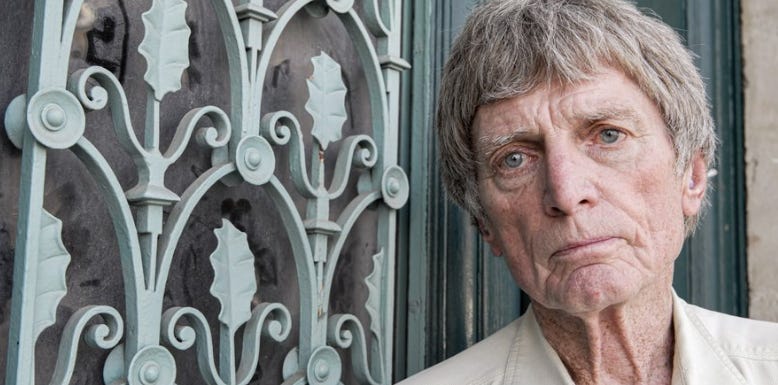
Writer Never Read: Kent Anderson
Book Read: Sympathy for the Devil
Many years ago, I conceived of a reading project for myself, which is something I do often but have only ever followed through on this one time, meaning now, these posts. This project, which I did nothing about beyond purchasing a couple of titles recommended to me in replies to social media posts I made requesting them, was to gather together and read a lot of novels focused on the Vietnam War, specifically combat novels. The combat novel, it seems to me, is something of a subgenre of the war novel, which itself is often a subgenre of the historical novel. The reason behind why my interest in Vietnam War combat novels suddenly sparked back then eludes me now, but I find the interest is still hanging on. Within the genre of war novels, I’m definitely drawn more towards the down and dirty aspects of what being in the middle of such a nightmare might be like — and these novels are not infrequently written by veterans — more than I am towards the Herman Wouk-ian sweeping epics (though I’d like to read those books, too), and as for Vietnam, well, growing up when I did, which was shortly after American movies decided to seriously lift the hood and look inside at the nuts and bolts of that war, a kind of bleak nostalgia for Vietnam was in full swing. Not the activism of films like Coming Home and, to a lesser degree, The Deer Hunter1, or the phantasmagoria of Apocalypse Now, but rather the more boots on the ground films like Platoon and Hamburger Hill and Full Metal Jacket. None of which is to say those films aren’t political — Platoon is pretty straightforward in that regard — but for example, with Full Metal Jacket, Kubrick was more than content with letting the viewer find whatever politics they wished to find within it. The point being that the Vietnam War was everywhere in the 1980s and 90s. TV detectives were veterans of it, whole TV shows were based around it, there was even a Marvel comic book for a while, that I never read, called The ‘Nam. Vietnam vets began writing crime novels. And the war, in general, began to loom, again, as it did when it was raging, like a kind of black stain on the country. Well we’ll see about that, I probably thought at the time (I doubt I would have heard about, or registered that I’d heard about, My Lai at that point), and then barely thought about it.
The Vietnam literature I have read, which is shamefully meager in terms of sheer quantity, has been memorable, however. Probably the first one I read was The Short-Timers, Gustav Hasford’s first, and still only findable, novel, and the basis for Full Metal Jacket. And to be perfectly honest, I’m sure I read that more out of a budding devotion to Kubrick than I did because I was interested in war literature. I remember liking The Short-Timers, though, while also being surprised by how much less profane it was than Kubrick’s film. I know a lot of R. Lee Ermey’s drill sergeant spiel was improvised by him, but even so. What would hold Hasford back from going full tilt, bad words-wise, in 1979, when the book was published? More impactful was Tim O’Brien’s The Things They Carried2, which I was drawn to specifically because of the subject matter, but I would guess also because of that subject matter being paired with the structure of interconnected short stories. An excellent book, though it’s been forever since I read it. I still have a memory, though, of going back time and again, while I was in the middle of the book, to a passage that described a soldier stepping from the shade of trees, into bright sunlight, and onto a landmine, so that his body seemed to be lifting up into the sun. A beautiful image that turns your blood to ice. Best yet, at least as far as my memory will take me at the moment, was the title story of Thom Jones’s landmark story collection The Pugilist at Rest. “The Pugilist at Rest” is one of those rare short stories that seem to somehow be about everything (Tobias Wolff has written many of these). Some stories that have that feeling can achieve this effect through a very narrow focus (ibid), while stories like “The Pugilist at Rest” take something huge like the Vietnam War, and the story of the main character, everything about his existence, blossoms out of that war. It’s a remarkable piece of work.
And of course there have been others. I read The Quiet American, Graham Greene’s proto- or ur-, your choice, Vietnam novel. I’ve read Dog Soldiers, Robert Stone’s “the war’s lasting impact” literary crime thriller. Larry Heinemann’s Paco’s Story, a curious thing, that one. Not fiction, but I’ve read Michael Herr’s extraordinary Dispatches. I also made it a couple hundred pages into Koko, one of several of Peter Straub’s horror novels and thrillers with some strong connection to the war (I was surprised to learn he wasn’t a veteran), which I abandoned for reasons I can no longer remember but when thinking back on what I did read, and how much it’s stuck with me, I can only assume they were really stupid and/or lazy reasons. But anyway, you get the idea. Not completely ignorant of this particular field of literature, but I’m no kind of expert.
I mentioned earlier that in the 80s and 90s, there seemed to be a kind of upsurge in the number of Vietnam vets who’d turned to writing crime fiction, as well as other kinds of thrillers. If not an actual upsurge in the numbers at the time, that’s when I started to notice, which is all that matters. James Crumley, one of the best to ever do it, and also who, yes I know, obviously started writing in the late 60s; the aforementioned Robert Stone, whose work obviously spread out to other arenas of literature, but who always seemed to be at least glancing in the direction of the crime thriller; Nelson DeMille, whose best-selling airport novel The Charm School is surprisingly cold-blooded; or, if the authors weren’t Vietnam vets themselves, then their series detective would be — see James Lee Burke and his character Dave Robicheaux3.
Which brings us, at long last, to Kent Anderson, and his novel Sympathy for the Devil. Originally published in 1987 (the same year Full Metal Jacket came out, a fact that I hope will eventually become interesting), reprinted in 1993 with a preface by Crumley, in which he expresses his friendship with and admiration for Kent Anderson, and his still hot anger about the war, and then again as a Bantam mass market paperback in 1999 (the year Eyes Wide Shut came out and Kubrick died, which is pure coincidence). That’s the one I have.
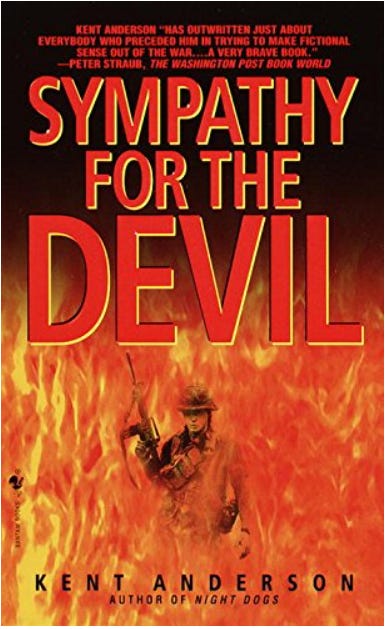
That’s a hell of a cover isn’t it? I’m just now realizing the pun in that last sentence, and I’m sorry. Not subtle, that cover, I think you’d agree, but why go subtle, and how do you manage it, with a Vietnam novel with that kind of title? I was assured by treasured subscriber Chas that Kent Anderson’s own favorite quote from a review for Sympathy for the Devil was “morally repugnant,” from the Kirkus review. I cannot confirm Anderson’s love for that quote, but I can confirm the quote’s existence (though if you haven’t read the novel, I wouldn’t read that review; in just a paragraph, it gives away a lot). Which is the whole thing with this book: though I generally disapprove of novel titles being simply lifted from song titles (from song lyrics is perfectly fine), you know, making that famous title my famous title, too — I disdain the practice, but what else to call this thing? That title is what the novel is implicitly pleading for.
And here, I hope, is where it gets interesting, because where anonymous Kirkus review book critic had a point is in acknowledging that Sympathy for the Devil is plotless. Where they miss the mark yet again is in acting as though this is a problem. “Plotless” seems to me to be an almost essential component of the combat novel. Our protagonist here is a young man named Hanson. When we meet him, he belongs to a Special Forces unit doing reconnaissance work. Early on, we pick up that his closest friends and allies in the whole of the American military are with him in this unit: a barely sane schemer named Silver, and an absolute psychopath named Quinn. One of Quinn’s big moments is when, close to the end of Part One of the novel, while he and Hanson are walking past a cartoonishly out of his element GI who has been gathering together a collection of pet ducklings, Quinn grabs one of the ducklings and bites its head off, to the horror of the GI, and the amusement of Hanson. Quinn considers it an example of his own genius.
So this is who we’re dealing with. Although one never occurs, on almost every page of the first and third sections of the novel — the second is different, and I’ll come back to that — it seems like another My Lai could break out at any second. You’ll read few war novels in your life more cynical than this one. It also manages to somehow be one of the most death-haunted, which is a competitive field, in how lightly it always seems to take the deaths of anyone or anything (not atypical for a war novel, animals fare poorly in Sympathy for the Devil, and if that’s a problem for you, as it is for me, buckle up). Or how unimportant. After chasing down and killing an enemy soldier who was fleeing a battle that enemy soldier’s side had lost:
Hanson put a fresh clip in his weapon, slung the SKS over his shoulder, and started to walk off. Then he stopped, turned, and looked in the dead man’s face. Already he was starting to look like all the others. His eyes were gluey and flat; the tiny wrinkles and lines that had made his face different from any other face were beginning to soften and fade. All you dead people, Hanson thought, look alike. Then he leaned over the body and said softly, “But now you don’t have to worry about being slow anymore, you don’t have to worry about dying.”
That’s the nice thing about war, he thought. If you win, the other guy’s dead. Period. And you’re alive. If you lose you’re dead, and your problems are over.
That passage comes fairly early in the novel. If you’re the kind of reader inclined to think that by encountering this attitude so soon, the rest of the novel must be about Hanson’s transformation from this callous, unfeeling beast into a human being again — if you, like Anthony Burgess, believe that in a novel the character must change — then have I got bad news for you. The bad news is for any of you who still have optimism in your heart, and would like it to be confirmed in fiction. But that doesn’t mean that in Sympathy for the Devil Hanson doesn’t change, because he does. We get that passage early because chronologically the novel is a little jumbled — though not confusingly so — but eventually you realize that, if anything, Sympathy for the Devil is about how Hanson got to that point, and stayed there.
Hanson joined the Special Forces because he was bored. Drafted into the Army, and after however many months in boot camp, he’s horrified to learn that after all that they’re going to be putting him behind a desk God knows where. Having none of that, and seeing that for an additional several months’ training he could be a combat-assured Special Forces soldier, he jumps on it. It is during that training where he first meets Quinn and Silver (Hanson and Quinn initially butt heads but get past it), and also has the meaninglessness of life and death and war and country drummed into him early. His first Commanding Officer, Lt. Andre, tears into one of the unit’s Vietnamese helpers for some mistake having to do with M-60s, really tore the man a new corn chute in front of everybody. Later, Andre explains to Hanson, and somewhat in the context of never being sure if the South Vietnamese men and women working for you are really on your side, or are spies for the Viet Cong, this having been the case, with fatal consequences, many times already:
“And you remember this morning, when I jacked him up about those M-60s? It wasn’t really his fault, but you’ve got to do that. Get too friendly with them and they lose respect for you. Can’t get ‘em to do shit.
“Listen to me,” he said. “I sound like some cigar-chewing asshole from Alabama. I used to be a good liberal. Got tear-gassed in a picket line once.”
He laughed and looked across at the smoldering patches of brush the tanks had shot up.
“Fire superiority and fear,” he said. “That’s how you enforce the law. That’s why those people back in the States push that peace and love so hard. It’s a real comfort to believe in the innate goodness of man. If you got that, hell, things are all right. You can sleep at night if you believe that.”
The man they’re referring to, Chung, is not disloyal. When Hanson asks Andre if he really thinks Chung could be on the side of the VC, Andre replies “No, not that. He hates the Communists. They killed his family.”
I should note here that Sympathy for the Devil begins with two quotes that Hanson has pinned above his bunk. One is by Anton Chekov, to the effect that in order to become desensitized to suffering, one must “cease to live.” The other is from General Vo Nguyen Giap, the Commander-in-Chief of the North Vietnamese Army, and it’s this: "Every day in the world a hundred thousand people die. A human life is meaningless.”
Those who choose to make a habit of commenting on the Vietnam War, it being so unpopular and such a catastrophe, have a tendency to either romanticize or completely disregard the North Vietnamese Army and the Communists role in it. While my own conservatism becomes ever more moderate, at least in comparison to the other kinds that are available, let’s not kid ourselves here. I’m reminded of a bit in The 50 Year Argument, Martin Scorsese and David Tedeschi’s documentary about the New York Times, when one of the editors describes angry letters from readers canceling theirs subscriptions because they felt betrayed because after years of publishing op eds in protest against the Vietnam war, the Times were now publishing articles about atrocities committed by the Khmer Rouge. In Sympathy for the Devil, the only Vietnamese characters you learn anything about, or hear from, are people like Chung, or the Montagnards (shortened usually to Yards), natives indigenous to Vietnam, who also suffered much at the hands of NVA, and who, with characters like the somewhat mystical, and somewhat romantically wise Mr. Minh, accompany Hanson’s unit to do the same job, though in their case with a much stronger moral motivation, and essential good will towards their country, than guys like Hanson, and certainly Quinn, do.
Anderson writes about Mr. Minh and the other Montagnards with some warmth, and admiration. And he sees in Hanson something beyond a trigger happy psycho. Because Hanson was lost before he was ever drafted, no connection with his family, somewhat anti-social by nature, but frustrated by that nature, and the nature of the world:
But Hanson was looking for what he called clues, some pattern in the tidal pool that might explain something or part of something, might hint at what he should do, or forecast an event. The patterns and movement of larger masses — the ocean wind and the grass, the quality of the light, hawks and clouds — he called them omens. They were no more or less important than clues, but he watched them differently. Omens moved around and over him; they came and went suddenly, around and over him; they came and went suddenly, and he could only hope to realize their meaning before they were gone. They could not be studied like tidal pools. The world was alive with omens and clues, like dust sparkling in the sun. Hanson felt that if he could discern the pattern in time, he could leap into it and take his place in the world, like leaping into complex and manic dance.
And this is one of the main reasons Hanson wanted to join the Special Forces and see combat: it was his understanding, which turned out to be true, that it was in the shared experience of combat that true bonds between men were formed. There’s something naively moving about that idea, an emotion somewhat undercut by the scene where Hanson calls the woman in charge of filing and approving transfers, and asks that she change it so that he’s sent to train with Special Forces, not to a desk somewhere just because he can type. That scene, and that woman, are weird to the point of being eerie, and further strengthens the idea that, in war, only havoc and patternless violence exist, and that, as a Sergeant Major considers at one point, crazy people like Hanson survive wars because they realize that “none of it matters.” It’s no wonder, in any case, that when Hanson thinks of the word “home,” he’s thinking of Vietnam, not America. He returns to America at one point, where he has a hippie acid-freak wife, whom he treats quite badly; is driven slightly mad by the fact that he’s not dead, and has numerous awkward social interactions, such as one when he runs into a girl he knew in college; when she asks him what Vietnam was like, he says “No roads, no tourists. Well, occasionally you run across a few tourists but you get to kill them over there.” So he reenlists. There, Lt. Andre gives his life to protect Hanson just long enough for the new recruit to make it out alive. There, he learns what steps to take, and in what order to take them, when caring for your wounded buddy — to begin with, tell him it doesn’t look that bad. Because if you tell him how bad it looks, your buddy will die. When this part of Hanson’s training appears in the novel, I was surprised. The book had been so heartless up to that point, that to see these men being instructed on how to do something good took some getting used to. And to see that training be put into practice eventually, not just by Hanson but by Quinn, who I’m inclined to regard as the Devil of the title, not Hanson, changes the texture of the book, regardless of how callous the rest of it is.
One of the most curious aspects of Sympathy for the Devil is how self aware it appears to be. By that I mean, as a work of Vietnam War fiction, coming out in the midst of what in American culture was something of a Vietnam War boom. I pointed out that this novel came out the same year that Full Metal Jacket was released. This is good to know, because the two echo each other frequently, though not so loudly as to get too het up about it. There is a character in Sympathy for the Devil that somewhat resembles Vincent D’Onofrio’s character in the Kubrick film, but those characters travel different paths ultimately. And in any case I’m sure there’s some version, though hopefully less extreme, version of Pvt. Pyle in every war time boot camp. But then there’s that title, so explicitly evoking the Rolling Stones, and if there’s one Vietnam War movie cliche’ that could be counted on, it was the 60s/70s rock soundtrack. That’s all over Sympathy for the Devil, with references to the songs, and relevant lyrics, that the soldiers are listening to at any given time.
There are even references — indirect but impossible to miss — to Adrian Cronauer, the irreverent Armed Forces Radio deejay who was both real and played by Robin Williams in Barry Levinson’s tiresome Good Morning, Vietnam, which also came out in 1987, which means that those references to Cronauer must have come from Anderson’s personal experiences (in short, Anderson doesn’t seem to have liked him), rather than the culture in America in the 80s. So some of this is coincidence, or happenstance, or, really, probably has more to do with Roger Ebert’s rebuff to Gene Siskel’s critcism that Oliver Stone’s film Heaven and Earth (haven’t seen it) just recycled the same stuff from all the other Vietnam War films of the time, by asking “What do you want him to do, Gene, make up a new war?” Even as someone as decidedly not on board with Oliver Stone as I am, I did and do take Ebert’s point. Yet at the same time, reading Sympathy for the Devil, the novel feels like so much a part of its time, and that time isn’t the late 60s. When Hanson is back in America, he thinks:
And yet it was hard to believe that Vietnam really existed. It would be like going through the looking-glass into a familiar movie, to become actors, directors, prop men, in a long-running TV series in which you became the characters you had grown familiar with, comfortable with, over the years. Roles that had been waiting for you with lines you already knew.
Seeing the war as a TV show is a good way to underline how meaningless it was. I’m tempted to say there’s even a little bit — never mind how much of a both having and eating cake situation this would be — of a “To write poetry after Auschwitz is barbaric” about that attitude. But crucially, and as further illustration of the above, the novels ends in the only way it could: with stupid, meaningless, cataclysmic havoc.
II. Carnage Was a Serious Business
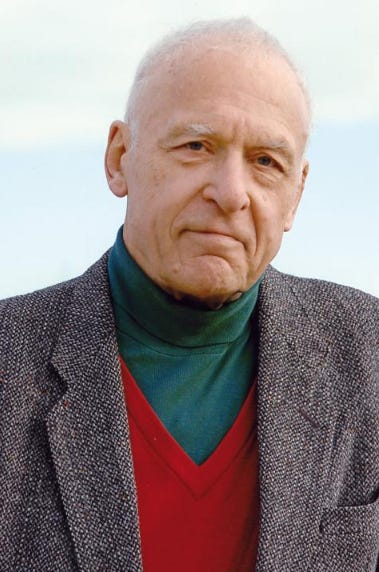
Author Read Before: Derek Robinson
Books Previously Read: Goshawk Squadron; Rotten With Honour; Kramer’s War; Piece of Cake; War Story; A Good Clean Fight; Damned Good Show; Hullo Russia, Goodbye England
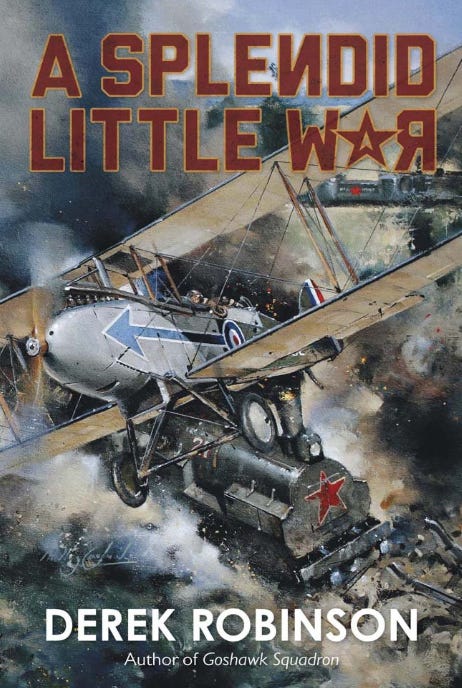
Book Read: A Splendid Little War
The story of how I came to discover Derek Robinson is a boring one, so let me tell it to you. Back in roughly the same era as the one described above, 80s/90s, I was aware that several of my older brothers were watching — on our local PBS station which, back then, as all PBS stations nationwide did, aired a lot of British TV on Sunday nights, this being how Monty Python became popular in America, or at least in my house — a miniseries about British fighter pilots in World War II called Piece of Cake. An odd title, I think I probably thought at the time, but I’m also pretty sure I got the joke. Anyway, I did not watch the miniseries, but some time later, and not too much later, I was in a bookstore and I saw a copy of a book called Piece of Cake by Derek Robinson, and on the cover was a drawing of a plane and an old-timey pilot, and somewhere on the cover was a note about how this was the basis for the Masterpiece Theater show that I hadn’t watched. But I did read books, technically, and in any event it was undeniable that I bought them, so I bought it, and this one I did read. Also, many years later, though still a long time ago, I bought the miniseries on DVD. I still haven’t watched it. I think I might be too close to the source material.
Because that novel, all 600 or whatever pages of it, had an effect. I’d never before read a novel, about war, or one that belonged to either of the violent genres I preferred, horror and crime, where it got to a point where any character could be killed at any time. Over and over again while reading that novel, my eyes would lock, would stop reading the words, because I would be thinking, “Wait, did that guy just die?” It didn’t matter how important that character had been, or seemed like he would continue to be. If he was in the wrong place at the wrong time during a dogfight, he was gone. And graphically, gruesomely. I still remember when Flip Moran’s Spitfire is shot up from behind, and his guts exploded across the plane’s controls. And what happened to that one Wing Commander, who I thought we’d be following through to the end. And all the other names, whether they made it to the end or not: Pip Patterson, Moggy Cattermole, Fanny Barton, Flash Gordon, Mother Cox. The Canadian, Christopher Hart III, aka CH3. It’s disorienting to be reading a book, especially a long-ish book, and begin to realize that there’s no one you can comfortably hold on to. The book begins with an RAF officer tripping, falling through the hatch of a plane (a plane on the ground), breaking his neck, and dying. So he’s not our main guy. And before the war really gets going, another pilot, during training, crashes into a river trying to do a trick, trying to be a daredevil. Accidents, freak and just stupid, kill as many of Derek Robinson’s characters as German or Russian bullets do. This feeling of disorientation and mortal dread would be a constant, or nearly, as I continued to read Robinson. And you’ll have noticed the gallow’s irony of the titles: Piece of Cake, A Good Clean Fight, Damned Good Show, today’s A Splendid Little War. These are of course intentionally ironic, but there’s a side of them that is sincere: like Anderson’s Hanson, many, if not most, of Robinson’s pilots feel more comfortable at war than at peace.
And I don’t want to make the fact of sudden death being a prominent feature in Robinson’s war fiction to sound like some kind of exploitational distancing, some kind of sleazy attraction for a reader just looking for some gore. I’ve never seen a war movie that made me feel as off balance as Robinson’s novels do. It becomes a human and humane experience — facing even a fictional representation of the truth of war, facing the understanding that at any given second a bullet fired by someone whose name you don’t know and whose face you can’t see will take you out, will end it right here and now, strengthens the inherent understanding I believe even non-vets have that if anything, the reality must have been worse. There’s a death in Damned Good Show that might have literally made me do a double take. By then you’d think I’d have been used to it, but no, which makes this — I guess you could call it a theme, but I’d rather not, myself — facet of Robinson’s war fiction also interesting on a technical level. How does he do it? If you read Robinson regularly, how can he still shock in this way? And more interestingly to me, which I don’t think I’d thought about before reading A Splendid Little War — because sudden death disrupts everything more than once in this novel too — is the question of how he goes about it. I mean, on a planning level. Part of me thinks he just plays it by ear. If he’s put a character in a situation where they’d probably die, then they die. Such is fate.
Like Sympathy for the Devil (and these books line up in a number of surprising ways, not just the obvious ones), A Splendid Little War is essentially plotless. It’s 1918, World War I had recently ended, the Royal Flying Corps has renamed itself the Royal Air Force, and the Bolshevik revolution is in full swing in Russia. Prime Minister Lloyd George and Minister of War Winston Churchill disliked the Communists (who doesn’t?) and wished, on a strictly advisory level (wink, wink) to assist the White Russian forces, led, Robinson assures us, incompetently by a real historical figures Lieutenant General Anton Denikin and Admiral Alexander Kolchak, against the Red Army. So some RAF squadrons — including Merlin Squadron, the one on which we will be focused — are sent to Russia to train and accompany Russian soldiers and pilots in their quest to take back Moscow. Communication is terrible and generally what is being communicated by Denikin’s people to the British forces is complete bullshit, painting a rosier picture of White Russian progress in the war than, it slowly becomes clear, is actually the case.
The most important pilots in Merlin Squadron, for a while anyway, are Wing Commander Griffin, a hard-nosed man who is generally disgusted with the flippant attitudes of the men in his squadron, a man who is later described as being mad “that Russia wasn’t Germany,” because during the war, the real war, not whatever this is, there was a mission to be believed in. There’s the adjutant, Captain Brazier (adjutants are a key figure in Robinson’s work). Then there’s James Hackett, next after Griffin in charge of the men flying Sopwith Camels, an Australian pilot shot through with cynicism, and an awareness that in this particular case British lives might be lost for no good reason, and therefore something of a foil for Griffin; and Tusker Oliphant, the man after Griffin in charge of the DH9 bombers. Which is a lot of firepower if you’re only there to advise. This squadron, over the course of the novel, will attack and be attacked, will train surly, driftless, disloyal Russians, and, for logistical reasons, travel by train from one jerry-rigged air field to another, as inaccurate communications regarding Denikin’s advancements continue to pour in.
The pilots who take part in this do so on a volunteer basis:
Two-thirds of the squadron volunteered for South Russia. “I’ll take half,” Griffin told the C.O. “You can keep the drunks and the sex maniacs and the ones who like pulling wings off butterflies.”
Those last three all ended up in Vietnam with Kent Anderson. But there’s an irony here, too, because, for one thing, although it’s not a really important factor, there’s plenty of drinking among the volunteers Griffin does accept, and while Merlin Squadron appears free of sex maniacs, pulling the wings off butterflies seems par for the course. Because in its way, A Splendid Little War is every bit as callous as Sympathy for the Devil. Not least because, like all of Robinson’s novels that I’ve read (except potentially Hullo Russia, Goodbye England, his least violent and the most peaceful of his novels, if you don’t count the somewhat dour air of domestic strife within it) it is essentially a comic novel. And it’s a very British kind of humor, dry, expressionless, sharp. A Splendid Little War is indeed so British that it contains the line “‘Do shut up, Fitzroy,’ said Sir Franklyn.”
From the start, pilots are dying, in one way or another — the first to go crashes on page one (this man is brought up again, a couple hundred pages later, in a heartbreakingly dismissive “remember that idiot?” context, by one of his former colleagues), the next, Bellamy, some forty or so pages later, of typhus. Bellamy might have been taken care of, but he thought he just had the shits, essentially, and if he refused to fly because of that, then he would appear to the others as someone making up excuses to get out of the dangerous missions, and Bellamy had seen what that kind of behavior did to other men. So he left his typhus untreated, and died. Anderson depicts a similar kind of clash, during the many mentions in his novel of the animosity Special Forces feel towards the regular Army, whom they regard as pussies. As these bodies pile up, though, so do the funerals. The least likable character in the novel is the Radio and Supplies Officer, a slimy, scheming man named Lacey, on whom it eventually falls to write and give poetic readings over these graves. Lacey plagiarizes from the great English poets shamelessly, and everybody knows it, RAF pilots at the time being fairly well-educated. When a pilot named Stevens questions him about it, and points out the passages he recognized, Lacey attempts to justify:
“Your first line: ‘Calm is the morn…’ Tennyson, isn’t it? His In Memoriam. But…'“ Stevens hunched his shoulders. “Not entirely Tennyson.”
“I changed the ending. ‘Without a sound’ is what Tennyson wrote but it sounded flat, so I made it ‘after direst duress,’ which also rhymes with line three, ‘one Ray the less.’ The chaps like poetry that rhymes.”
“So, not content with pinching bits of Tennyson, you mess them about too.”
“Enhance, Stevens. I enhance them.”
“Who else did you rape?”
“Oh…Shelley. Line two: ‘For the sword out wears its sheath.’ I wasn’t convinced by sheath.’ Not a very manly word. I changed it to clasp,’ which rhymes with ‘blast’ in line four.”
“No, it doesn’t.”
“Near enough…”
Lacey is the Quinn of A Splendid Little War, except he never kills anybody, which is one of the reasons everyone else in Merlin Squadron so despises him. But you see the humor, and the tone of it. Much of A Splendid Little War, and Robinson’s fiction in general, is like this. A lot of banter among men of a similarly clever and over-it-all bent (with the exception of one pilot named Jessop, who seems like a really humorless pill).
However, it’s not all laughing in the face of death. Because of course, Robinson’s characters only pretend that none of it matters, that it’s all meaningless, and then only outwardly, to the public, if you will. At the funeral of — and I’ll just have to go ahead and spoil this, because it hangs over the rest of the novel — Wing Commander Griffin, who went out in a fireball resulting in a recklessly, stupidly daredevil move (though one that amounted to a self sacrifice) in the air — Hackett, the man angry about the whole set-up is the new Wing Commander, and Robinson describes him not paying any attention to Lacey’s nonsense eulogy:
Hackett heard none of it. He was thinking of the other funerals he had attended, a few in England, where pilot training was famously deadly, the rest in France Too many to remember. Long ago he had learned the trick or coping with funerals: you told yourself that the coffin was empty, the chap had been posted, so forget him. Often it really was half empty, with sandbags to make up the weight. But this show was somehow different. He hadn’t come to Russia for this. Hed come to fly, to put on a show for the Russkis, to bag a few Bolos [Bolsheviks - Ed.]. Not to put men he knew in holes at ten on a foggy morning.
After Griffin’s death, there is a movement among the officers who have gone up a notch in responsibility following him getting posted, to turn this stupid mission into something that matters, that means something, that will make Russia like Germany, and that will, and Robinson is fairly blunt about this, selfishly bring them personal glory. That frustration of Griffin’s, that Russia is no Germany, will come to make a little more sense to the men who once scoffed at it, and hated Griffin for feeling it.
Then of course, there are the Russians. Most of the Russians in A Splendid Little War are like the Vietnamese characters in Sympathy for the Devil — very few are heard from. One who is, and whose importance to the novel becomes more and more important as it goes on, is Count Pierre Borodin, Merlin Squadron’s Russian Liaison, who will go on to become also a pilot and soldier, one of nurse Susan Perry’s romantic interests, kind of (Perry is a strong character, and the only woman who isn’t some weird Russian peasant; also, Robinson is reliably both free-wheeling and pessimistic when it comes to war-time romance in his novels). For reasons unclear to me, Robinson has made this fictional character a distant relative of a real Russian composer, Alexander Borodin. It’s inexplicable largely because he does nothing with it, other than, I suppose, firmly placing Pierre among the White Russian nobility. But Pierre is no morally thoughtless privileged layabout. He considers the Bolsheviks to be heartless, cruel butchers, and the nobility to be stupid and greedy. At one point, he expresses his desire that neither side win the war. Also dragged into this Nestor Makhno, a real Russian anarchist at the time, who Robinson describes in vile terms — the commander of an army made up of the rampant slaughterers of the innocent, killing half a town at one point as a way, as one character describes it, “of practicing their anarchy.”
The fact that both of today’s novels revolve around Western military actions against Communist forces is not lost on me. And when dealing directly with the political basis for both of these novels, it’s natural to assume that the person writing the piece you’re reading will bring into whatever analysis he or she is capable of providing any of the political biases they may have churning inside them, and don’t you worry, I’m about to. Or rather, I’m not, because I imagine you can easily assume, based on what I’ve written earlier in this piece, what my political bias would be. But there’s no reason to get into that, because for me that’s no longer the point. As I hope I’ve illustrated, both Anderson and Robinson, in their novels, both of which feature absolutely appalling atrocities, disgusting acts of the most heartless cruelty (some of it mentioned only in passing, as second-hand information, which doesn’t make it seem any better) — the kind of cruelty that can make you catch your breath, the kind of cruelty that seems so in fashion these days — have created images of almost towering inhumanity, so overwhelming in their awful implications that fresh humanity comes out of it, somehow. A belief that we can’t possibly keep going like this.
* * * * *
This post is the latest in what will turn out to be a very long series of essays about my year of reading, from 2025 to apparently the end of time. For more details about this project, please read this post.
A lesser degree because The Deer Hunter, a better film in every way than Coming Home, is a little bit more below sea level in its approach to the politics, which isn’t to imply they’re not present.
Also, I am a sucker for an interesting title, and I find The Things They Carried to be an interesting title for a Vietnam novel.
I was also surprised to learn Burke isn’t a vet, but I guess I just assumed, since Burke shared Robeicheaux’s alcoholism. It’s also possible I was starting to romanticize this a little bit.
I believe I’ve heard that Straub used to get lots of letters from veterans who assumed he had served. And I agree that you should finish Koko and then go ahead and read Mystery and The Throat.
Looked for Derek Robinson on my weekly dive into my local secondhand, now I have Goshawk Squadron to add to my endless list :-)